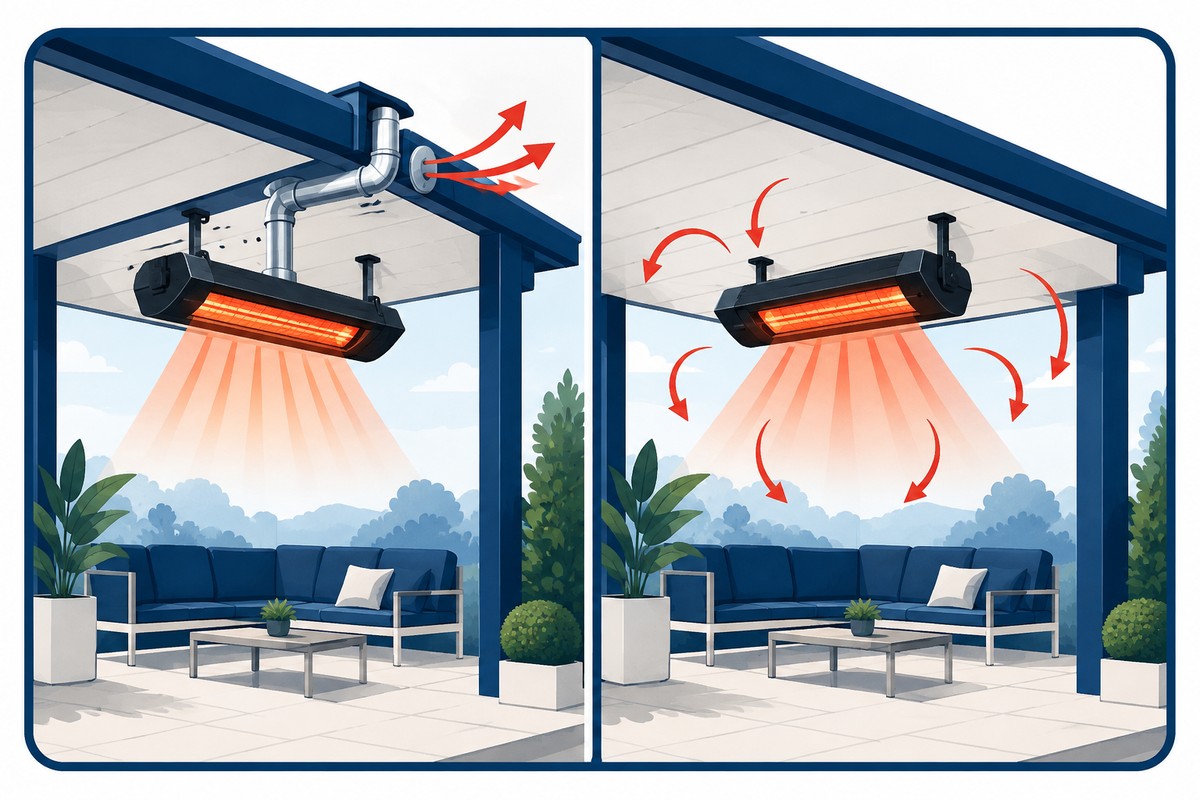
Vented vs non-vented infrared

Vented vs non-vented infrared
— which model fits your space?

Looking for reliable infrared gas heating across Toronto and the Greater Toronto Area? Toronto Air Systems delivers TSSA-licensed assessment, installation, repair, and maintenance from our North York shop at 132 Cartwright Ave — with written quotes, clear options, and equipment sized for real Ontario winters and humid GTA summers.

Venting decides the shortlist

Why enclosure type picks the heater — not the brochure

Non-vented (unvented) infrared heaters release combustion products into the space and rely on enough outdoor air exchange to stay safe and comfortable. Vented infrared heaters pipe flue gases outdoors, which suits more enclosed patios, vestibules, and structures where air quality and moisture matter. Choosing wrong can mean odours, condensation, or a failed inspection.

Toronto's semi-outdoor dining boom created a lot of “almost indoors” spaces — retractable walls, polycarbonate roofs, and wind screens — that blur the line. We assess openness, occupancy, and manufacturer listings before specifying. For broader patio options, see outdoor heating in the GTA.

This article compares vented vs non-vented infrared so you can shortlist correctly before requesting quotes. Call 647 953-4252 with photos of your enclosure for a model-class recommendation.

Toronto and GTA conditions are not mild-climate marketing charts. Design temperatures, humidity, older building stock, and mixed fuel strategies change how infrared gas heating should be specified. We start with how you use the space — occupancy, hours, duct capacity, electrical service, and existing equipment — before recommending parts or a full replacement.

Homeowners, landlords, and facility managers call us when systems short-cycle, ice up, leave rooms uneven, spike utility bills, or fail on the first deep freeze or heat wave. Whether you need a same-week repair or a planned upgrade, we document findings and present repair-versus-replace paths with pricing you can compare.

Explore related hubs for heating, cooling, and commercial HVAC, or ask about rebates and incentives that may apply to high-efficiency equipment. Call 647 953-4252 with model numbers and symptoms so we arrive prepared.

What matters most for infrared gas heating in the GTA
Right sizing, licensed gas/refrigeration work, and commissioning beat the cheapest sticker price. We verify airflow, safety devices, condensate paths, and controls so your system does not fail the first extreme week of the season. Ask us about dual-fuel, zoning, and rebate-eligible models during your quote.
Project incentives beyond the heater
Outdoor infrared units seldom carry standalone rebates, but paired indoor HVAC upgrades might. Check rebates & incentives when planning a larger renovation.
Vented or non-vented? Check these first
  • How enclosed is the space on a typical service night?
  • Retractable walls open or closed during heat use?
  • Ceiling height and air volume per heater
  • Ability to run a flue / sidewall vent path
  • Condensation risk on glass or polycarbonate roofs
  • Occupancy density (tight dining vs sparse lounge)
  • Manufacturer listing for indoor / outdoor / semi-outdoor use
  • Insurance or landlord requirements for unvented gas
Practical sequence

How we approach infrared gas heating

A structured process so you always know the next step.

01
Consult
Goals & constraints
02
Assess
On-site measurements
03
Compare
Repair vs replace
04
Schedule
Parts & access
05
Execute
Licensed install
06
Verify
Commission & teach
Enclosure decides the type

Vented vs. non-vented infrared heaters

The space you are heating — open, semi-enclosed, or covered — determines which type is safe to install.

Non-ventedVented
Best forOpen or well-ventilated patiosCovered or semi-enclosed spaces
Combustion ventingNot requiredRequired — routed outdoors
Install complexitySimpler, fewer clearance rulesMore involved venting & clearances
Code fitOpen-air applicationsEnclosed or partially enclosed applications
Step by step

From enclosure photos to the right listing

From first call to commissioned equipment, you always know the next step, the timeline, and what is included.

01
Consultation
Tell us about your home or building, symptoms, and goals — by phone or online form.
02
On-site assessment
A licensed technician evaluates your existing outdoor heating system, ductwork, and load requirements.
03
Written quote
You receive clear options, pricing, timelines, and rebate notes — no vague estimates.
04
Installation or repair
Our TSSA-licensed team completes the work to code with minimal disruption.
05
Follow-up support
We walk you through operation, warranty, and ongoing maintenance recommendations.
Specify with confidence

Vented and non-vented infrared heater services

We match listing, enclosure, and fuel path — then install to clearance and code.

Enclosure assessment
On-site review of openness, occupancy, and whether unvented equipment is appropriate at all.
Outdoor heating services →
Non-vented infrared installs
Listed outdoor / semi-outdoor units where air exchange meets manufacturer and code expectations.
Vented infrared installs
Flued radiant systems for more enclosed patios, entries, and structures needing exhaust outdoors.
Gas piping & regulators
Licensed connections sized for BTU load and future zone expansion.
Clearance & mount engineering
Safe distances to combustibles, umbrellas, and finished ceilings — documented.
Conversion advice
When an existing unvented layout should move to vented after enclosure upgrades.
Ask which model class fits →
Related services

We assess enclosure, ceiling height, and code before recommending equipment.

01
Outdoor Heating
Infrared & gas patio heating design and installation.
View outdoor heating →
FAQ

Vented vs non-vented infrared FAQ

Vented units exhaust combustion gases outdoors through a flue. Non-vented units release products of combustion into the surrounding air and need adequate outdoor air exchange. The safer, code-correct choice depends on how enclosed your space is.
Often no — or only within strict listing and ventilation limits. Highly enclosed spaces usually need vented equipment or a different heat strategy. We will not install against the manufacturer listing.
Typically yes — equipment plus venting labour and materials add cost. That premium buys air quality and broader enclosure flexibility. We show both options when both are legitimate.
It depends how often walls are closed while heaters run, and what the listing allows. A patio that operates enclosed for service should be treated more like a semi-indoor space in design.
Proper aiming and zoning matter most. Vented systems can reduce stuffiness in tighter dining rooms with roofs; non-vented can be excellent on open terraces with good breeze.
Visit our outdoor heating Greater Toronto Area page for patio and entry solutions beyond infrared gas alone.
Call 647 953-4252 or contact us with enclosure photos. We will specify the correct model class before you buy.
Cost depends on equipment capacity, brand, duct or piping complexity, electrical/gas upgrades, and whether you repair or replace. We provide written quotes after a site assessment so you can compare options fairly. Call 647 953-4252 for a visit.
Yes. We are based in North York at 132 Cartwright Ave and regularly serve Toronto, Mississauga, Vaughan, Markham, Scarborough, Etobicoke, Brampton, and nearby communities.
Yes. Gas and refrigeration work is performed by TSSA-licensed technicians. We follow Ontario code practice for venting, refrigerant handling, electrical disconnects, and condensate management.

Pick vented or non-vented with confidence

Listing-first infrared advice and licensed install — Toronto Air Systems, 647 953-4252.